$49M Lost and Counting: A UX Analysis of Jumia’s Online Shopping Journey
A usability-focused teardown of Jumia’s product and checkout experience, identifying user experience gaps contributing to cart abandonment and lost revenue — with recommendations grounded in ecommerce best practices and heuristic evaluation.

Ottawa, Ontario, Canada
E-commerce
UX Designer / Auditor
3 Weeks
The Problem
Jumia, Africa’s biggest e-commerce platform, is struggling with declining active users, high cart abandonment, and losses of over $49M in 2023.
They pulled out of several underperforming markets. Their active customer base declined year-over-year. And user trust? Still shaky.
At first glance, you might think:
“That’s just a business problem.”
But here’s the truth: it’s a user experience problem masquerading as a business problem.
The Audit
I ran a full UX audit of Jumia focusing on the customer checkout journey.
My goal? To uncover how design decisions were silently draining millions in potential revenue.
What I found was alarming, but fixable.
Frameworks used:
Nielsen Norman Group’s 10 Heuristic Principles
Baymard Institute’s E-Commerce UX Guidelines (based on 700+ usability tests)
Behavioral insights from African e-commerce shoppers
Data from Baymard Institute shows that:
70% of carts are abandoned on average
34% of users abandon if forced to create an account
Fixing checkout UX alone can recover up to 35% of lost sales
Beyond design patterns and guidelines, the real story lies with the customers Jumia is failing to serve.

Personas
🧑🏽💻 Tolu — The Window Shopper
28, digital marketer, mobile-first, compares deals
Wants to: save items, get price-drop alerts, return later
Frustration: cart wiped across devices, no wishlist, no alerts → exits before buying
👷🏽♀️ Amina — The Urban Working-Class Shopper
22, teacher, Lagos-based, budget-driven, time-poor
Wants: clear pricing, bundles, smooth checkout on a mid-tier phone
Frustration: cluttered UI, hidden fees, poor filters → overwhelmed and abandons cart
The Business Reality
Jumia’s product experience is optimized for:
Logged-in users
Desktop shoppers
One-time transactions
If Jumia doesn’t provide a seamless experience for users like Tolu and Amina, they simply shop from local and international competitors.
UX Issues Identified That Could Recover Millions
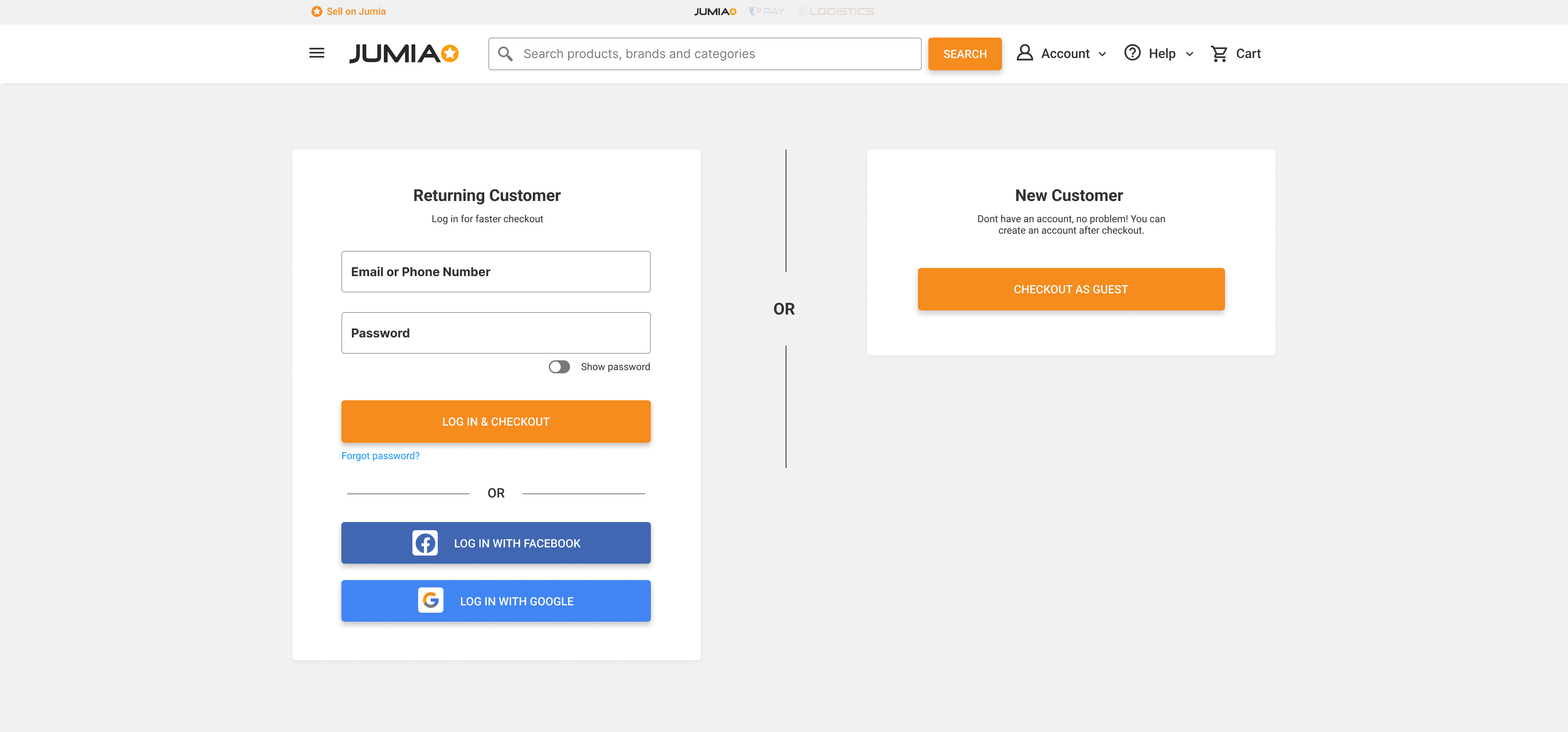
1. Lack of Guest Checkout
According to Baymard Institute, 34% of shoppers abandon their cart if they’re forced to create an account.
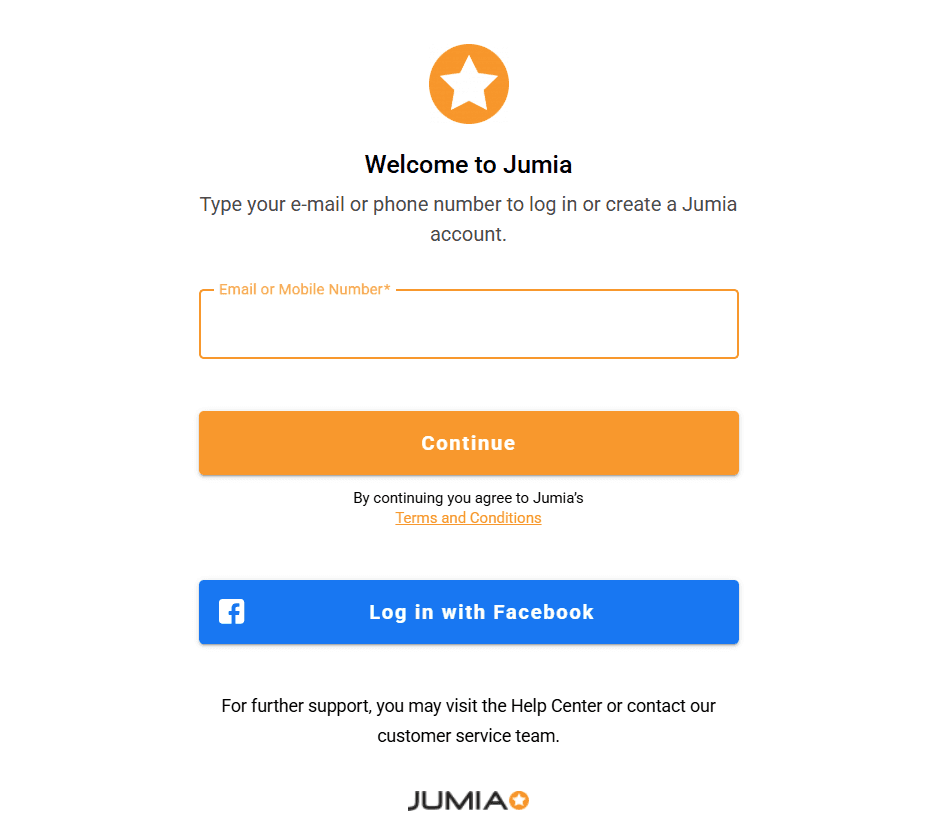
Jumia still prioritizes login over convenience.
There’s no “Checkout as Guest”, and no easy path for one-time buyers.
In a market where digital trust is fragile, forcing users to commit upfront is a conversion killer.
Heuristic Violation: Lack of flexibility and efficiency of use
Business Impact: Friction for first-time users results in abandoned carts. This also massively lowers the conversion rate.
🔧 Recommendation: Add a Guest Checkout option to improve the first-time buyer experience.
2. No Gift Wrapping or Gifting Experience
E-commerce isn’t just transactional, it’s emotional.
Gifting taps into powerful emotions like love, gratitude, and celebration, all of which drive impulse purchases and higher AOV (Average Order Value).
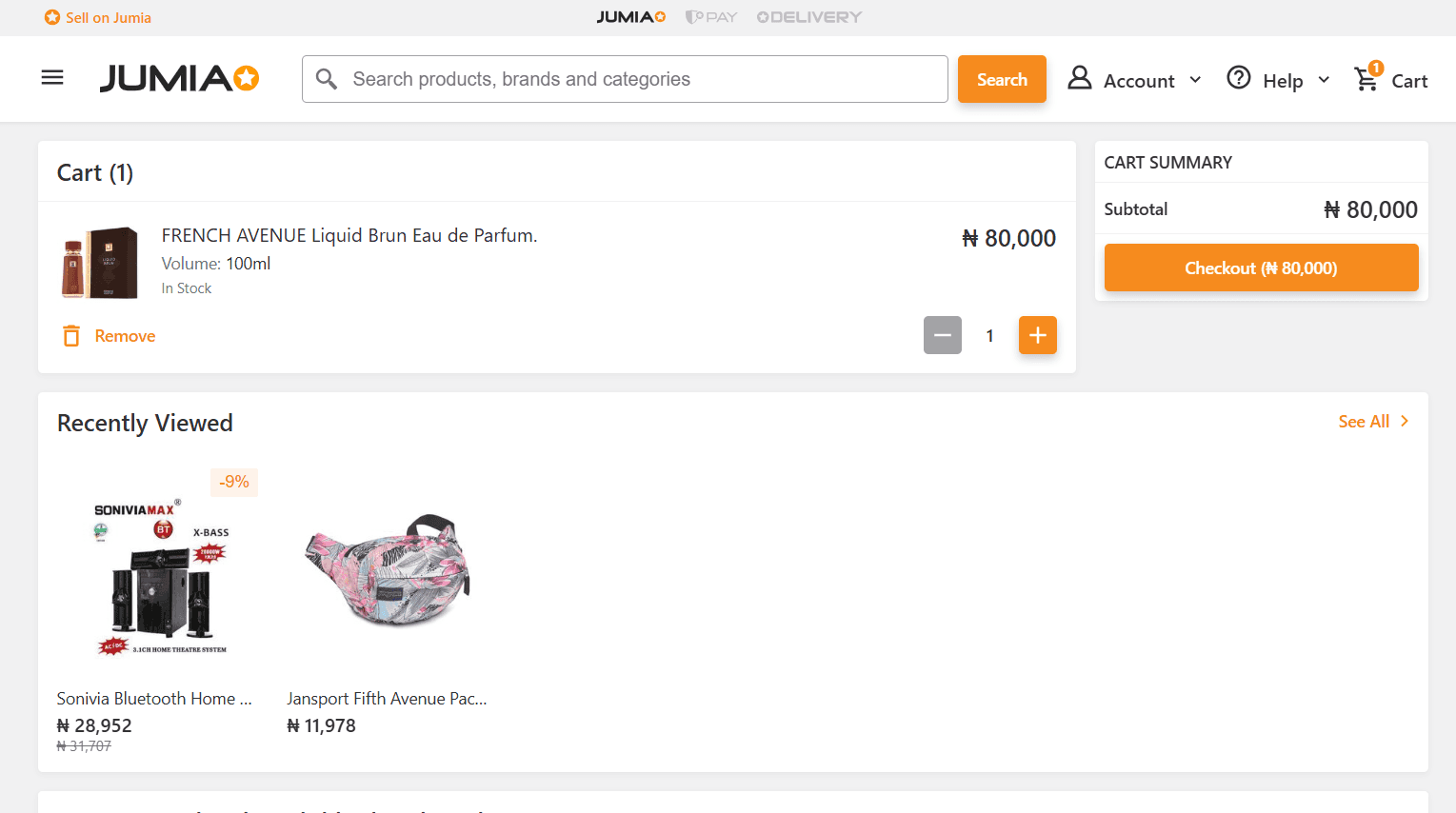
Yet Jumia offers no gift wrap option, no personalization, and no message field.
For someone buying a birthday or festive present, there’s no way to indicate it — or to make the experience feel special.
UX Violation: According to Baymard Institute guideline #753, Gift options should be simple, clear, and emotional.
Heuristic Violation: No match between the system and the real world
Business Impact: Lost AOV growth + missed emotional connection with users. This also contributes to checkout abandonment.
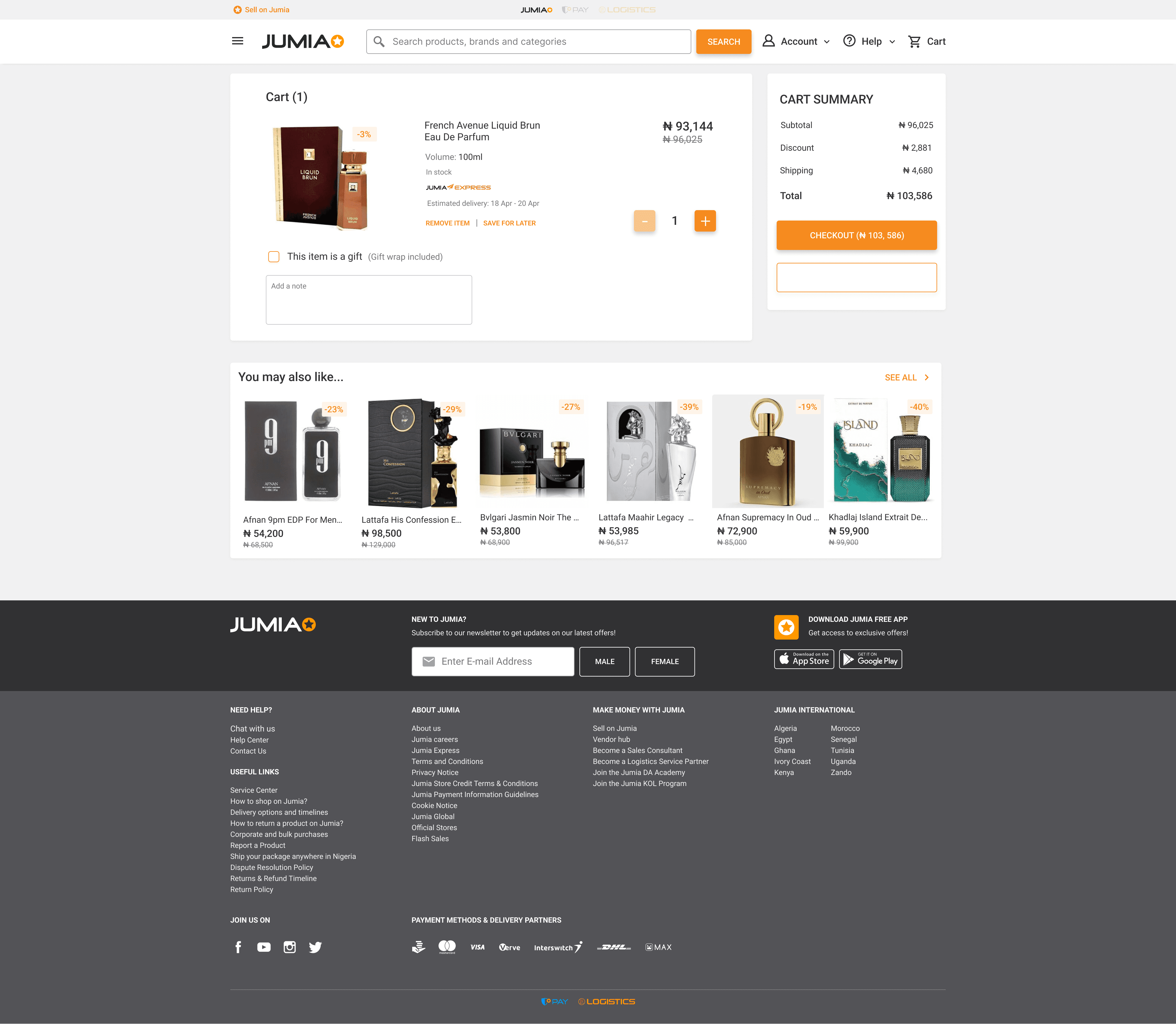
🔧 Recommendation: Integrate the gift wrapping option more smoothly into the checkout flow.
Clearly state:
What the wrapping includes (e.g., branded wrap, message card, etc.)
The cost (if any)
A visual preview or sample image
Add “Why this is a good idea” — e.g., Perfect for birthdays, holidays, etc.
3. Weak Cross-Selling on Product Pages
When a customer completes a purchase, trust and attention are at their peak. That’s the moment to extend the journey, not end it.
Jumia’s order confirmation page, however, doesn't currently recommend items related to what you're about to purchase.
This page could help increase lifetime value (LTV), reduce remorse, and boost repeat visits.
Instead, it leaves money — and engagement — on the table.
Issue: Missing or irrelevant “related products” suggestions.
Impact: Missed opportunities to increase AOV (Average Order Value).
🔧 Recommendation: Use smarter product recommendations tied to browsing history and complementary items.
Takeaway
Every business metric is a UX metric in disguise.
Fixing Jumia’s UX isn’t about aesthetics — it’s about recovering millions in lost revenue, rebuilding trust, and meeting African users (like Tolu and Amina) where they are.
Good UX isn’t a cost. It’s a growth strategy.